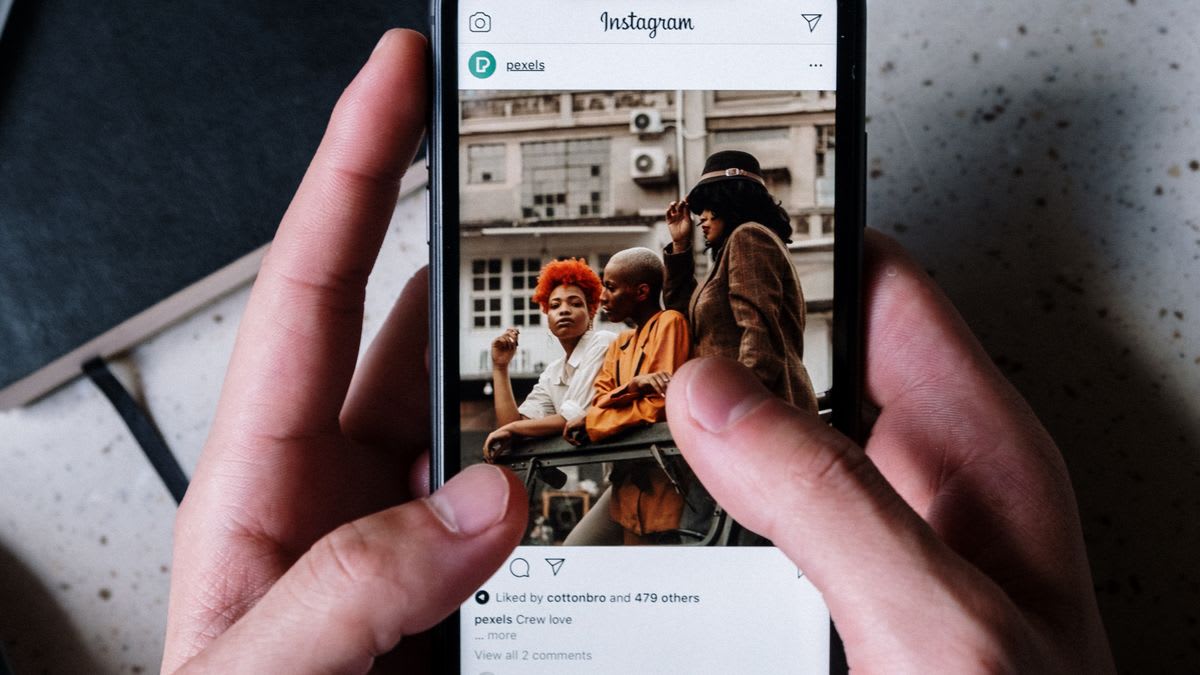
A practitioner guide to social media management in Nepal: what the job really covers, content calendars, posting cadence, tooling, and hiring in or out.
A social media hire in Nepal is usually advertised as "posting on Facebook and Instagram". The work that actually fills the week is wider than that: deciding what the brand says, producing it, publishing it on schedule, answering the messages that arrive afterwards, and reporting whether any of it moved the business. Those five duties are the job. Tool subscriptions, templates and trending audio are support.
Everything below assumes the channel and budget questions are already settled; if they are not, those decisions are worked through in our guide to digital marketing in Nepal. This piece starts one step later, at the point where the channels are chosen and someone has to run them week after week.
It covers what the role includes, how to build a calendar that survives a Nepali festival season, what posting cadence is realistic per platform, which tools earn their cost, how an in-house hire compares with an agency retainer once statutory costs are counted, and which numbers indicate business impact rather than applause.
What the job actually covers
When a scope is written badly, the client expects strategy and the freelancer delivers three graphics a week. Write it out explicitly:
- Strategy and planning. Content pillars, monthly themes, campaign calendars tied to real business events such as a new branch, a seasonal offer or a Dashain scheme.
- Production. Copy in Nepali, English or both, graphics, short vertical video, and coordination with whoever shoots product photos.
- Publishing. Scheduling, platform-native formatting, and adapting one idea into the formats each platform actually rewards.
- Community management. Comments, Messenger and Instagram DMs, Viber enquiries, review replies. In Nepal this is often where the sale happens, and it is the part most often left unstaffed.
- Paid amplification. Audience setup, budget pacing and creative testing, which in practice means running campaigns in Ads Manager rather than boosting from the Page. Treat this as a separate line from organic work.
- Reporting. A monthly note that connects activity to enquiries, calls and orders, not a screenshot of reach.
Community management deserves the sharpest definition, because it carries a response-time promise. Decide whether replies are handled within working hours only, whether Saturdays are covered, and who answers during Dashain and Tihar when the rest of the office is closed. An unanswered DM for four days costs more than a missed post.
Building a content calendar that survives a busy month
Fix four or five pillars, then stop inventing
A pillar is a recurring reason to post. For a Bharatpur furniture retailer that might be: new arrivals, workshop and craft process, customer homes, care and maintenance advice, and offers. Every planned post belongs to one pillar. This single constraint kills the blank-page problem that ends most calendars in week six, and it makes the calendar reviewable by an owner who does not want to approve captions one by one.
Lay the festival spine before anything else
Nepal's commercial year has a shape, and a calendar that ignores it will be rewritten in a panic. Block the spine first: Nepali New Year in Baisakh, Teej, the Dashain and Tihar block, Chhath in the Tarai, Losar, and whatever sector-specific season applies, such as admissions cycles for schools or the trekking season for travel operators. Then work backwards. Dashain creative that starts on Ghatasthapana is late; the buying decision was made weeks earlier.
Batch production on a two-week rhythm
A workable cycle for a small team: plan the month in the last week of the previous month, shoot and design in one two-day block per fortnight, schedule a week ahead, and keep roughly one slot in five open for reactive posts. Batching is what makes a single hire sustainable. Producing content the same day it publishes is how people burn out and how quality slides in month three.
Keep an approval rule, not an approval habit
Agree who approves, in what window, and what happens if they go silent. A common workable rule: captions and creative go to the owner every Thursday, silence by Saturday means approved, anything urgent goes by phone. Without this, the calendar becomes a queue waiting on one person's WhatsApp.
Posting cadence per platform
The cadences below are starting points to test against your own analytics, not platform rules. Publish at this rate for six to eight weeks, read the results, then adjust. Consistency at a lower cadence beats a burst followed by three silent weeks.
| Channel | Starting cadence to test | Format that carries | First metric to watch |
|---|---|---|---|
| Facebook Page | 4–6 posts per week | Vertical video and single strong image; native uploads, not link dumps | Content interactions and message starts |
| 3–5 posts per week, plus stories most days | Reels and carousels | Saves, shares and profile taps | |
| TikTok | 4–7 posts per week | Short vertical video with a hook in the first two seconds | Watch-through rate, then follows |
| YouTube | 2–3 Shorts per week; 1–2 long videos per month | Shorts for reach, longer explainers for search | Views from search and suggested, plus subscribers gained |
| 2–3 posts per week | Text with one image; hiring, projects and process notes | Follower quality and profile visits from target firms | |
| Viber community or broadcast | 1–2 messages per week, hard ceiling | Offers, stock updates, service notices | Leave rate — treat it as the cost of every send |
| Google Business Profile | 1 update per week | Photos, offers, hours changes during festivals | Calls and direction requests |
One caution on cross-posting. Re-uploading a TikTok clip with its watermark to Reels, or pushing an Instagram post to Facebook automatically, produces content that reads as recycled. Adapt the caption and the aspect ratio at minimum.
Tooling that earns its place
Small Nepali teams overspend on tools far more often than they underspend. The starting stack is short:
- Meta Business Suite for scheduling Facebook and Instagram, and for keeping Messenger and Instagram DMs in one inbox. It is free and it covers the two channels that matter most here.
- A cross-platform scheduler such as Buffer or Metricool, only once TikTok, LinkedIn or YouTube join the mix and the native tools stop being enough.
- A design tool with a locked brand kit, so colours and fonts survive staff changes.
- Native analytics — Meta Business Suite insights and YouTube Analytics — read monthly rather than daily.
- A shared calendar in a spreadsheet or a task board. Which one matters far less than whether the client can see it.
- A Google Business Profile, claimed and kept current. For a shop in Bharatpur or Kathmandu this often drives more walk-ins than any post.
One local wrinkle: most of these subscriptions bill in US dollars, so a Nepali company needs a bank-issued international card or a foreign-currency facility to pay them, and the finance team should know that before the trial expires. Free tiers cover a surprising amount of the work for a single-brand account.
In-house versus agency: comparing the real cost
Comparing a salary against a retainer is the wrong comparison, because the salary is only part of what an employee costs. Nepal's statutory floor for workers is NPR 19,550 per month for fiscal year 2082/83, made up of NPR 12,170 basic and NPR 7,380 dearness allowance, and a real social media executive commands well above that floor. On top of pay, section 25 of the Social Security Fund's social security scheme operation procedure requires the employer to deduct 11 percent of the worker's basic remuneration, add a further 20 percent of that basic remuneration from its own pocket, and deposit the combined 31 percent with the Fund.
An employee also carries entitlements a retainer does not. Section 37 of the Labour Act 2074 gives every worker an amount equal to one month's basic remuneration each year as festival expense, and the same Act sets paid home leave at one day for every twenty days worked and paid sick leave at twelve days a year. Someone has to cover the desk while that leave is taken.
The retainer side has its own additions. VAT in Nepal is 13 percent, so a VAT-registered studio's invoice carries it. Withholding also applies: under the Income Tax Act 2058, service fees are subject to 15 percent tax deducted at source, while business contracts above NPR 50,000 carry 1.5 percent, and which treatment fits a marketing retainer depends on how the engagement is written, so confirm it with your accountant before the first invoice.
| Cost line | In-house hire | Agency or studio retainer |
|---|---|---|
| Base pay | Your offer, never below the NPR 19,550 statutory floor | Bundled into the monthly fee |
| Social Security Fund | 11% deducted from basic remuneration, employer adds 20% on top, 31% deposited | Carried by the vendor |
| Festival expense and paid leave | One month's basic remuneration a year under section 37, plus home and sick leave | Continuity is the vendor's contractual obligation |
| VAT | Not applicable to salary | 13% on the invoice from a VAT-registered vendor |
| Withholding tax | Salary TDS per income slabs | 15% on service fees, or 1.5% on business contracts above NPR 50,000 |
| Tools, stock assets, fonts | You buy and renew every subscription | Usually inside the fee; confirm in writing |
| Video and photo production | Often an extra freelancer or equipment purchase | Specify shoot days per month or it will be argued about |
| Ad spend | Billed to you either way | Billed to you either way; ask whether management is a percentage or flat |
| Product knowledge | Deepest here, and it stays in the building | Shallower, and it leaves when the contract ends |
| Range of skills | One person's ceiling for copy, design, video and ads | A team, so weak areas are covered by someone else |
The honest rule of thumb: a single in-house hire wins when the product needs deep familiarity and the volume of daily conversation is high, such as a clinic, a school or a showroom. A retainer wins when you need video, design and paid media at a level one salary cannot buy, and when the work is campaign-shaped rather than continuous. A common middle path in Nepal is one in-house coordinator who owns the inbox and the calendar, with a studio contracted for production and paid media.
Metrics that indicate business impact
Reach, impressions and follower count are the metrics most reports lead with, and they are the least useful. Reach reflects what the platform chose to distribute that week. Followers accumulate and can be bought. Neither tells you whether anyone tried to buy something.
Replace them, or at least demote them, in this order:
- Conversations started. New Messenger, Instagram, Viber and WhatsApp threads per week. This is the closest organic signal to intent in the Nepali market, where most purchases begin with a message rather than a form.
- Qualified enquiries. Of those conversations, how many asked about price, availability, location or booking. Tag them in a simple sheet; the effort is ten minutes a day.
- Cost per qualified enquiry. Calculated here exactly as it is for every other channel, using the method set out in the digital marketing plan for Nepali businesses. It is the figure that lets you compare a retainer against a hire, and against a completely different channel.
- Saves and shares. Of all engagement types, these track most closely with content people intend to act on. A like is a reflex; a save is a plan.
- Profile taps, website sessions and calls. Tag every link you post with UTM parameters so the traffic shows up as a named source in analytics rather than as direct. Track calls and direction requests from your Google Business Profile alongside them.
- Repeat customer share. The slowest metric and the one owners care about most. Ask new customers where they heard of you, and write it down.
Report monthly, not weekly. Social results are noisy at seven-day resolution, and weekly reporting encourages chasing a single post that happened to travel.
Two compliance points worth planning around
First, platform availability in Nepal is not a given. Under the social media directive issued in 2023, platforms are required to register with the Ministry of Communication and Information Technology, and on 4 September 2025 the government blocked 26 unregistered platforms, including Facebook, Instagram, WhatsApp, YouTube, X, Reddit and LinkedIn, while TikTok and Viber, already listed, continued to operate. The block was lifted days later after mass protests, but the registration framework remains. The practical lesson for any Nepali business is to keep channels you own — a website, a phone list, an email or Viber list — so a policy decision cannot cut off your customers overnight.
Second, know which side of the digital service tax rules you sit on. EY's summary of the Inland Revenue Department's amended VAT and DST procedures describes a 13 percent VAT and a separate 2 percent digital service tax on non-resident providers supplying digital services to consumers in Nepal, each biting only above a threshold: transactions of more than NPR 2 million in the preceding 12 months for the VAT, and more than NPR 2 million per income year for the DST. Consumer is defined narrowly there — a person who buys goods or services by separate arrangement for business purposes is expressly excluded — so a company buying Meta or Google ads to market itself sits outside that regime. What does apply to your ad budget is your own PAN and VAT position, and that is worth settling with your accountant before spend scales rather than at audit.
Frequently asked questions
How many platforms should a small Nepali business run?
Two, done properly. For most retail and service businesses that means a Facebook Page and a Google Business Profile, with Instagram added when the product is visual and TikTok when the audience skews young. Facebook's advertising reach in Nepal was 14.8 million in late 2025 against Instagram's 4.35 million, so spreading thin across five channels usually costs reach rather than adding it.
Is it cheaper to hire in-house or use an agency in Nepal?
Neither is reliably cheaper until you count the full cost. An employee costs base pay, plus the employer's own 20 percent Social Security Fund contribution on basic remuneration on top of the 11 percent deducted from the worker, plus festival expense, leave cover and tool subscriptions. A retainer adds 13 percent VAT and withholding tax but absorbs the team, the tools and the cover. Compare cost per qualified enquiry over three months rather than headline price.
How long before social media produces measurable results?
Expect eight to twelve weeks before the numbers mean anything, because you need enough posts for the pattern to separate from noise. Message volume and saves usually move first; enquiries and repeat business follow. Anyone promising results in three weeks is describing paid ads, which is a different budget line.
Should we post in Nepali or English?
Match the audience, not the brand's self-image. Businesses selling locally in Bharatpur, Butwal or Pokhara generally get more engagement in Nepali or in mixed script. Firms selling to enterprise buyers, donors or an overseas diaspora often need English. Running both on one account works if each post picks a lane instead of duplicating itself.
Who owns the accounts and content if we change agencies?
The business should, always. Put it in the contract: the client owns the Meta Business Manager, the Page and Instagram accounts, the ad account, the domain and the raw creative files, and the agency is granted access rather than ownership. Recovering a Page from a former vendor is slow and sometimes impossible.
Related stories

Hiring a Software Team in Nepal: A Buyer's Guide
What it really costs to hire developers in Nepal against India, Vietnam and the Philippines, plus the true timezone overlap, IP terms and payment rules.

Digital Consulting Services in Nepal: A Buyer's Guide
Digital consulting services in Nepal, explained plainly: what a consultant delivers, when hiring beats in-house work, NPR fee ranges and reseller red flags.

NRB AI Guidelines: How Nepal's Banks Must Audit AI
The NRB AI Guidelines put independent review of AI systems on the agenda for every licensed institution in Nepal. Here is what such a review actually covers.