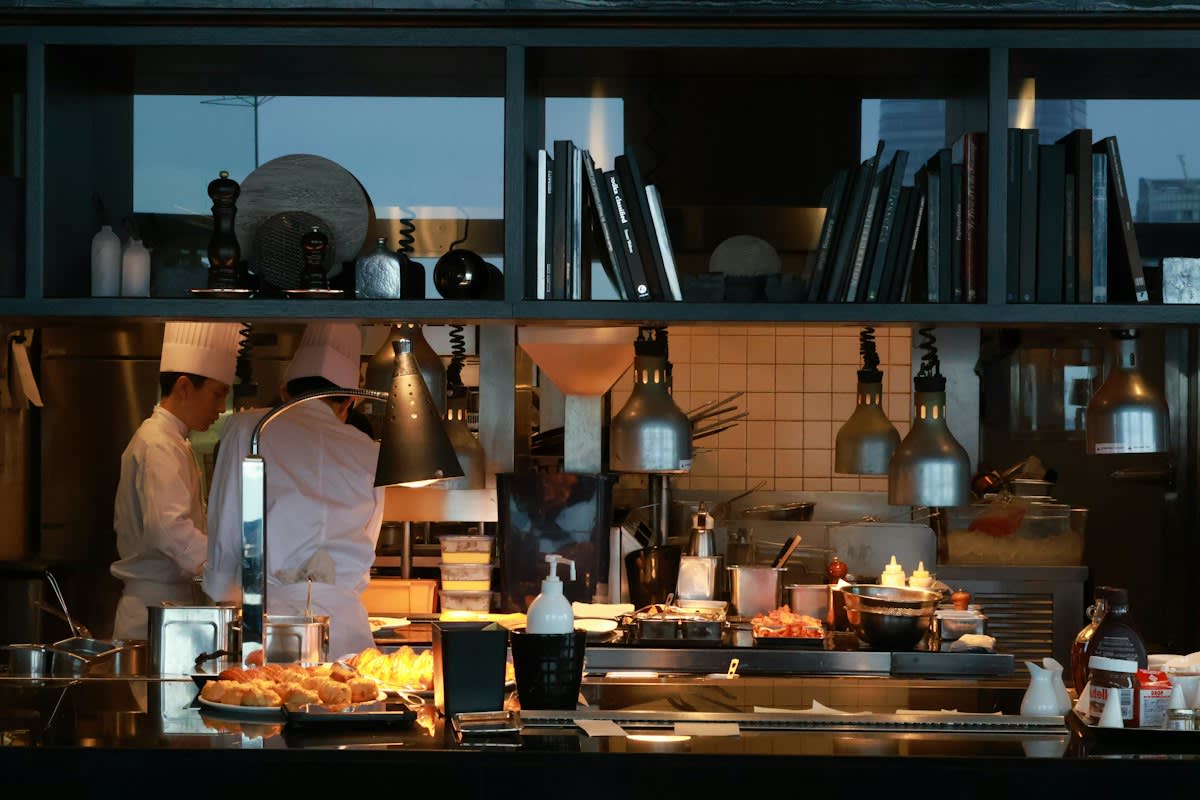
Restaurant management software in Nepal should catch stock variance, cash shortfalls and unpaid khata. A practical guide with checklists for café owners.
Many restaurants and cafés in Nepal do not lose money in one big mistake. They lose it a few hundred rupees at a time: a kilo of chicken nobody can account for, a drawer that is Rs 600 short at closing, a regular customer whose khata has quietly grown past Rs 20,000. Good restaurant management software in Nepal should make those small leaks visible every day, not at the end of the year when the accountant asks why the margin fell.
This guide is for owners and managers who want tighter control over three things: stock, cash and credit. It explains how to work out stock variance, how to reconcile the cash drawer every night, and how to run a khata without it turning into bad debt. The advice works on paper or in a spreadsheet. At the end we explain how Restro, the restaurant back-office app we build at Lattice Nepal, handles the same jobs.
Where restaurants in Nepal lose money without noticing
A busy kitchen and a full dining room can still produce a thin month. When owners look closely, the gap usually comes from the same few places:
- Stock that leaves without a sale. Over-portioning, spoilage, staff meals nobody records, and plain theft all look the same in the store room: the shelf is emptier than sales say it should be.
- Cash that does not match the bills. A wrong change, a QR payment counted as cash, or money taken from the drawer for a quick purchase without a note.
- Credit that is never collected. Khata given to people with no limit and no follow-up, and supplier udhaaro whose due dates nobody tracks.
- Bills that disappear. A voided or heavily discounted bill with no reason recorded is the easiest way to hide a missing payment.
None of these needs expensive equipment to fix. They need a routine, and numbers that are written down when things happen rather than remembered later.
Restaurant stock management: measure variance, not just stock
Counting what is on the shelf tells you how much you have. It does not tell you whether the right amount was used. For that you need stock variance: the difference between what your sales say you should have used (theoretical usage) and what actually left the store (actual usage).
How to calculate stock variance
- Write a simple recipe for each dish: how much of each main ingredient goes into one plate. For example, 100 g of chicken for one plate of chicken momo.
- Multiply by the number of plates sold in the period. That is your theoretical usage.
- Work out actual usage: opening stock + purchases − closing stock (from a physical count).
- Variance = actual usage − theoretical usage. Multiply by the cost per unit to see it in rupees.
Here is a worked example for one week of chicken at a momo shop:
| Item | Figure |
|---|---|
| Plates of chicken momo sold | 300 |
| Recipe quantity per plate | 100 g |
| Theoretical usage | 30 kg |
| Opening stock | 40 kg |
| Purchases during the week | 20 kg |
| Closing stock (counted) | 22 kg |
| Actual usage (40 + 20 − 22) | 38 kg |
| Variance | 8 kg |
| Cost at Rs 550 per kg | Rs 4,400 for the week |
Rs 4,400 a week on one ingredient is more than Rs 2 lakh a year. Some of that is honest waste, some is portioning and some may be theft. The variance alone does not tell you which, but it tells you where to look.
How to reduce food waste and stock theft in a restaurant
- Count high-value items often. Meat, cooking oil, cheese, imported drinks and cigarettes are worth a weekly or even daily count. Rice and onions can wait for the month.
- Log wastage where it happens. A dropped tray or a spoiled batch should be written down by the kitchen when it happens, with a reason. Recorded waste is a cost; unrecorded waste looks like theft.
- Issue stock from the store on request. When the kitchen asks for stock and someone approves it, you know which shift took what.
- Use first-in, first-out. Older batches go to the front. Check expiry dates on dairy and packaged goods during each count.
- Standardise portions. A scale and a scoop at the pass cost less than a week of over-portioning.
- Record staff meals. Free food for staff is fine. Unrecorded free food makes every variance figure wrong.
Daily cash reconciliation for restaurants
Cash reconciliation means comparing what should be in the drawer with what is actually there, every day, before anyone goes home. In Nepal this is harder than it sounds, because one bill can be paid partly in cash, partly by eSewa, Khalti or Fonepay QR, and partly on khata.
The single most important rule: only cash belongs in the cash count. If a QR payment is entered as cash, the drawer will read short by that amount every day, and a real shortfall hides inside it.
A simple end-of-day drawer check
| Line | Example (Rs) |
|---|---|
| Opening float | 5,000 |
| + Cash received on bills | 38,450 |
| + Cash received against khata balances | 2,000 |
| − Cash paid out (petty purchases, supplier payments) | 3,200 |
| − Owner drawings | 5,000 |
| = Expected cash in drawer | 37,250 |
| Counted cash in drawer | 36,650 |
| Variance (short) | −600 |
Two habits make this work. First, record owner drawings as drawings, not as expenses or "miscellaneous". If the owner takes Rs 5,000 for household use, that is not a cost of running the restaurant, and mixing the two hides both the real profit and the real shortfall. Second, write the variance down every day with the name of the person who closed the drawer, even when it is zero. A pattern across two weeks says much more than one bad night.
Wallet and QR payments
Wallet and QR money reaches your bank account later than the sale, and if your provider charges a merchant fee, the amount that arrives is lower than the bill. Keep both the gross amount (what the guest paid) and the net amount (what reached your account), and match them when the settlement comes in. Otherwise the fees vanish from your books.
Running a restaurant khata (credit ledger) safely
Khata is often how a restaurant keeps its regular customers: office staff who pay at the end of the month, a nearby shop, a family who eats in every week. The problem is not credit itself. It is credit with no name, no limit and no reminder.
- Register every credit customer with a name and phone number. "Dai from the bank" is not an account.
- Set a credit limit for each customer, and do not let a bill go on khata past it without the owner's approval.
- Record part-payments against the balance on the day they are made, and give the customer a clear balance when asked.
- Review balances weekly. A balance that only grows needs a conversation, not another month.
The same applies the other way round. Supplier udhaaro (what you owe the meat supplier, the vegetable seller, the gas dealer) should be tracked with due dates, not just a total. Knowing what is due this week stops a sudden cash crunch.
A restaurant control checklist: daily, weekly, monthly
| When | Task | Who |
|---|---|---|
| Every shift | Log wastage with a reason; record staff meals | Kitchen |
| Every day | Count the drawer; record expected, counted and variance | Cashier and manager |
| Every day | Review voids and large discounts, each with a reason | Manager or owner |
| Every day | Match wallet and QR payments to what was billed | Manager |
| Weekly | Count high-value stock; check variance against recipes | Manager |
| Weekly | Review khata balances and supplier dues | Owner |
| Monthly (Nepali month) | Full stock count, close the month, hand reports to the accountant | Owner and accountant |
Close the month in Bikram Sambat
Your accountant works in Nepali months: Shrawan, Bhadra, Ashwin. Reports that show August or September have to be converted by hand, and that is where errors come in. Once a month is closed and handed over, nobody should be able to change a bill inside it. If something must change, it should be a new entry in the current month, with a reason.
How Restro helps
Restro is restaurant back-office software that Lattice Nepal builds for restaurants in Nepal. It is not a POS. It is built for restaurants that bill by hand from a bill book, and it keeps the book behind that bill rather than replacing it. Waiters take orders on their phones, the kitchen sees the tickets, and the numbers above come out of normal service.
What it does
- Orders and the floor. Staff see every table as free, occupied or seated too long, take orders at the table, and send them to a live kitchen ticket rail. The kitchen marks dishes ready and the waiter is notified.
- Stock variance from recipes. Managers enter recipes, purchases and stock counts, and Restro compares counted stock with theoretical usage. Wastage and stock requests are logged where they happen.
- Daily drawer reconciliation. Each cash session records expected and counted cash and the variance. Only cash touches the drawer, and owner drawings are kept separate from expenses.
- Split payments. One bill can be paid across cash, eSewa, Khalti, Fonepay and khata. Wallet settlements keep both gross and net amounts.
- Khata with a name on it. Credit is only allowed for a registered customer within their credit limit. Otherwise the sale is refused, not just warned about.
- Supplier dues. Supplier credit is tracked with due dates.
- Voids that stay visible. A bill can be reopened or voided only with a recorded reason, and voids and discounts show up in reports.
- Bikram Sambat periods. Reports are picked by Nepali month, and a closed month refuses new changes.
- Excel exports for sales, purchases, stock movements, expenses and stock on hand, with both BS and AD dates.
- Roles. Staff, kitchen, manager, accountant and owner each see only what they need. Kitchen staff never see money.
Safe on a slow connection
Restaurant Wi-Fi can drop during the dinner rush. Restro needs a connection to save changes, but it is designed so that a waiter tapping "send" twice on a slow connection does not create two orders. Orders and payments are retry-safe: a repeated attempt is recognised as the same action, not a new one. When the connection goes, the app shows whether the problem is your internet or the server, and clears the warning by itself when the connection comes back.
Separate data, several outlets
Restro is multi-tenant: each restaurant's data is kept separate from every other restaurant's at the database level. An owner with more than one outlet can manage them from the same account.
A note on billing and tax
Restro does not replace a fiscal billing printer and does not take card payments. It is the record behind your bills. If your restaurant is registered for VAT or other taxes, ask your accountant which billing rules apply to you, and check the Inland Revenue Department website for current requirements.
Getting started
The Android app is on Google Play as Restro: Restaurant Manager. Menus, recipes, purchases, staff and full reports are managed on the web. We set restaurants up one at a time, so the best first step is to tell us about your restaurant on the Restro product page, and we will talk through how your floor runs before anything is switched on.
Frequently asked questions
What is the best way to reduce stock theft in a restaurant?
Compare actual usage with recipe-based theoretical usage for your most expensive ingredients every week. Log wastage and staff meals as they happen, issue stock from the store on request, and count high-value items often. A variance that keeps appearing on the same shift shows you where to look.
How often should a restaurant reconcile its cash drawer?
Every day, at closing, before staff leave. Record the opening float, cash received, cash paid out and owner drawings to get the expected amount, then count the drawer and write down the variance with the name of the person who closed it.
Is Restro a POS or billing machine?
No. Restro is a back-office app. Your staff keep billing by hand from the bill book, and Restro records the orders, payments, stock and cash behind those bills. It does not replace a fiscal billing printer.
Can I use Restro for khata customers?
Yes. You register credit customers with a credit limit, put bills or part of a bill on khata, and record payments against their balance. Restro refuses a khata sale for an unregistered customer or one that would go past the limit.
Does Restro work with Nepali dates?
Yes. Reports and month-end closing use Bikram Sambat months, and Excel exports include both BS and AD dates.
Related stories

Hiring a Software Team in Nepal: A Buyer's Guide
What it really costs to hire developers in Nepal against India, Vietnam and the Philippines, plus the true timezone overlap, IP terms and payment rules.
Social Media Management in Nepal: Practical Guide
A practitioner guide to social media management in Nepal: what the job really covers, content calendars, posting cadence, tooling, and hiring in or out.
Renewal Reminder App for Nepal: Licence, Bluebook, Passport
A renewal reminder app for Nepal: track driving licence, bluebook, vehicle tax, insurance and passport dates in BS or AD, and stop paying late fees and fines.