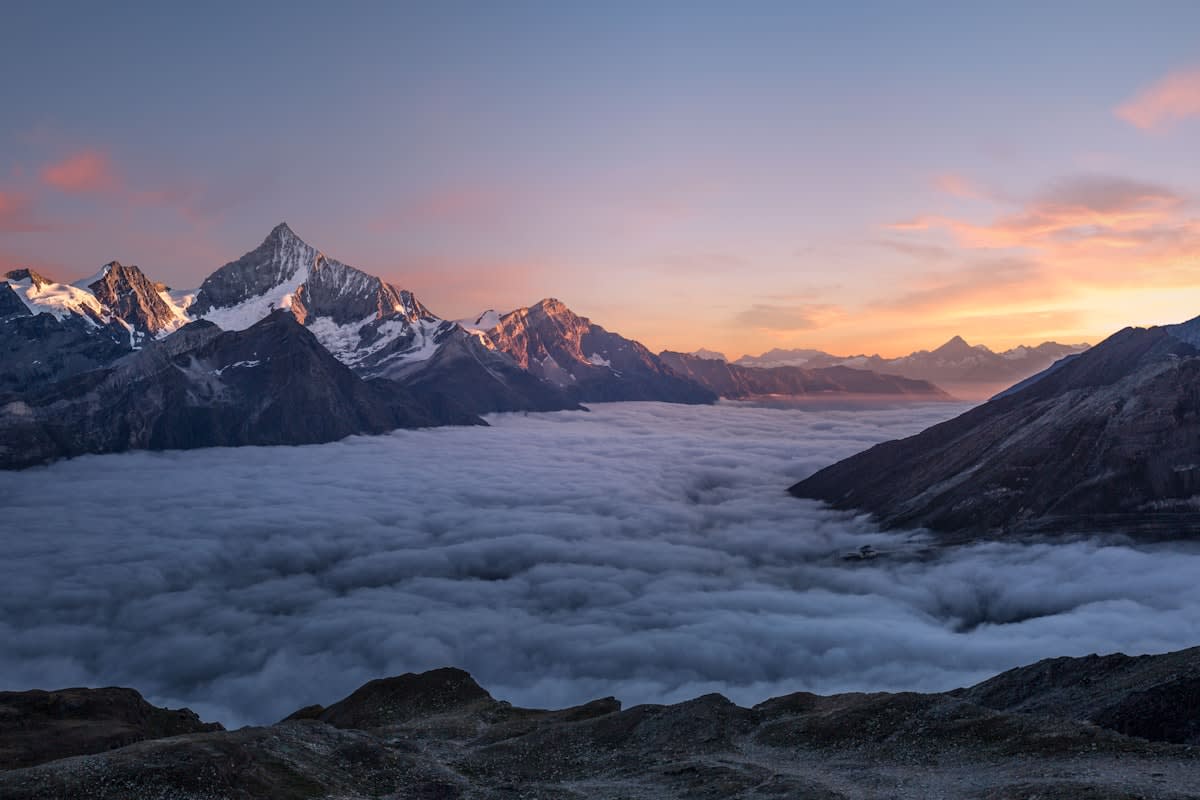
Everest's spring 2026 climbing season set an all-time record with 1,008 successful summits and 492 permits issued — the first season at the new USD 15,000 permit fee.
Spring 2026 will be recorded in mountaineering history as the season when Everest finally crossed the four-figure summit count. A total of 1,008 climbers reached the 8,849-metre peak between late April and the close of the climbing window in late May — the highest number ever confirmed in a single season, surpassing the previous record set in 2023. Nepal's Department of Tourism issued 492 permits this year, also a record, edging past the 479 issued in 2023. And it was the first season at the new USD 15,000 permit fee, up from USD 11,000, putting mountain-tourism revenue firmly back on the front pages.
The Record: 1,008 Summits in a Single Season
The 2023 season had set the previous benchmark with roughly 800 successful summits from 479 permits. This year, a combination of factors pushed the number well beyond that mark. Meteorologists and expedition operators credited an unusually stable weather window through the third and fourth weeks of May, when the jet stream shifted north earlier than in most recent years, leaving a stretch of calm, low-wind days on the upper mountain. Multiple expedition operators reported that their teams were able to attempt and complete summit bids without the multi-day waits at the South Col that have plagued more turbulent seasons.
The Department of Tourism confirmed the 1,008 figure on 29 May 2026, citing data from liaison officers stationed at base camp and from climbing permits cross-checked against summit reports. The tally covers both the Nepal (southeast ridge) and Tibet (northeast ridge) approaches, though the Tibet side remains subject to Chinese permit quotas and figures from that side tend to be released later.
Fatalities remained within the range seen in recent high-traffic seasons. As of the Department of Tourism's end-of-season count, eight deaths were confirmed on the Nepal side — a figure that, while never insignificant, is proportionally lower than in several prior record seasons. Rescues by helicopter from high camps were credited with averting what could have been a worse outcome during one sudden-weather episode in late May.
The New USD 15,000 Permit Fee
For the first time in Everest's commercial climbing era, climbers paid USD 15,000 to the Government of Nepal for a permit to attempt the mountain from the Nepal side. The fee was raised from USD 11,000 — the rate that had been in place since 2015 — following a government decision in 2024. With 492 permits issued, the gross permit revenue from the Nepal side alone reached approximately USD 7.38 million, or roughly NPR 985 million at current exchange rates, before any deductions for administrative costs.
That figure does not capture the full economic footprint of the season. Expedition logistics, Sherpa wages, porter payments, base camp supply chains running through Namche Bazaar and Lukla, and the downstream spending by hundreds of climbers and their support teams in Kathmandu represent a multiple of the permit revenue. The Nepal Mountaineering Association has previously estimated that each Everest expedition generates, on average, USD 40,000–60,000 in additional in-country spending beyond the permit fee.
Criticism of the fee increase came from several directions. Some in the international climbing community argued that raising the price had done nothing to reduce overcrowding — the 492 permits issued in 2026 exceeded 2023's record — and that a meaningful quota system, rather than a price signal, was the only way to manage congestion on the fixed rope between Camp IV and the summit. The Nepal Mountaineering Association has said any quota discussion requires a broader policy process and has not indicated a timeline.
Standout Achievements: Records Within the Record
Three individual achievements drew particular attention this season. Tshering Pasang Sherpa, from the Khumbu region, reached the summit at 16 years and 5 months of age, becoming the youngest person on record to summit Everest from the Nepal side. His ascent revived the longstanding debate about minimum age limits — currently set at 16 under Nepal's mountaineering regulations — with some veteran climbers and safety advocates arguing the bar should be raised, while others pointed to Tshering Pasang's guided, well-resourced ascent as evidence that the regulation itself is the operative safeguard.
The season's most technically remarkable feat came from Chinese climber Gexi Luori, who summited both Everest (8,849 metres) and the adjacent Lhotse (8,516 metres) twice each within a single climbing season — a combination with no precedent in the record books. Lhotse shares Everest's south face and can be accessed via the same base camp and much of the same fixed-rope infrastructure, but completing two return trips to both summits in a matter of weeks demands a physiological profile and logistical precision that drew admiration across the mountaineering world.
Norwegian climber Kristin Harila, who in 2023 set the speed record for all fourteen 8,000-metre peaks, returned to the Khumbu this spring and completed what has been described as the "Everest Trip Crown" — summiting Everest, Lhotse, and Nuptse (7,861 metres) in a single season. Nuptse's sharp ridgeline makes it a demanding objective in its own right, and the combination of all three peaks of the Everest massif in one season has historically been attempted only rarely.
Implications for Nepal's Mountain Tourism Revenue
Nepal's Ministry of Culture, Tourism and Civil Aviation has projected international tourist arrivals of 1.3–1.5 million for 2026, a target that would surpass any pre-pandemic year. Monthly figures from the Department of Tourism showed 92,573 arrivals in January, 105,441 in February, and 120,516 in March — all running 8–15% ahead of the corresponding months in 2025. The spring mountaineering season, which runs across the same months as Nepal's peak trekking season, is structurally important to these numbers.
Everest permit revenue flows to the central government but the economic effects disperse rapidly through the rural economy of the Khumbu and Solu-Khumbu districts. Sherpa high-altitude workers, base camp cooks, yak herders carrying expedition loads between Lukla and base camp, lodge owners along the trail from Phakding to Gorak Shep, and the small traders of Namche Bazaar all have direct stakes in the season's scale. A season of 492 permits, each backed by a team requiring an average of four to eight Sherpa support staff, generates a substantial wage pool in an area where alternative formal employment is limited.
For Nepal's macroeconomic picture, mountain tourism sits within a broader foreign exchange story. Gross foreign exchange reserves reached NPR 3,704.55 billion (USD 24.19 billion) in mid-May 2026 — a 38.3% increase from a year earlier — driven primarily by surging remittances. Tourism's contribution is smaller in aggregate but disproportionately significant in the Himalayan districts where it constitutes the primary cash economy.
The Solo Trekking Ban and What Has Changed for Visitors in 2026
Everest's record season unfolded against a regulatory backdrop that has materially changed the experience of visiting Nepal's high mountains. From 1 April 2025, the government formally required all trekkers on routes within national parks and restricted areas to be accompanied by a licensed guide from a registered trekking agency. The rule had been debated for years and was finally enforced in 2025 as part of a broader push to formalise and bring revenue accountability to an industry where a significant share of visitors had been walking independently.
The practical effect varies by route. On the Everest Base Camp trail — one of the world's most-walked high-altitude paths — the majority of trekkers were already using guides or porters before the rule took effect. On quieter routes such as the Tsum Valley, Nar Phu, and sections of the Manaslu Circuit, the change has been more disruptive to budget-conscious solo walkers who previously planned itineraries without agency involvement.
Alongside the guide requirement, the government has expanded its e-TIMS (Electronic Trekkers' Information Management System) digital registration platform. QR-scanning stations are now operational at major village entry points on all major trekking corridors. Trekkers register before departure — either directly or through their agency — and their permits are verified electronically at checkpoints. The system was designed to reduce the problem of unregistered visitors and improve real-time data on trekker numbers and locations, which has safety implications in areas prone to sudden weather events.
The solo trekking ban drew criticism from independent travel communities, particularly budget travellers from Europe and North America for whom a guide fee represents a meaningful addition to daily costs in what has traditionally been one of the world's most affordable mountain destinations. Nepal remains comparatively inexpensive — teahouse trekking on the Everest route runs USD 25–40 per day for food and accommodation before permits and guide fees — but the compulsory guide cost, typically USD 25–35 per day for a licensed guide, adds a fixed expense that was not previously mandatory.
The Department of Tourism has defended the requirement on two grounds: safety, given the number of trekking incidents involving solo walkers in remote terrain, and economic equity, since the guide industry provides livelihoods to thousands of Nepalis whose incomes collapsed during the COVID-19 travel stoppage and have only partially recovered. Whether the regulation will hold at its current strictness through the 2027 season — or be modified under pressure from the budget travel sector — remains to be seen. For now, anyone planning to walk Nepal's national park and restricted area routes in 2026 needs to budget for and book a licensed guide before arriving at the trailhead.
What the 2026 Season Tells Us About Everest's Future
A thousand summits in a single spring is a milestone that generates competing reactions. For Nepal's mountaineering industry, it validates the commercial infrastructure — guides, fixed-rope teams, oxygen logistics, helicopter rescue — that has made high-altitude climbing accessible to a far wider range of aspirants than was conceivable a generation ago. The Icefall Doctors, who fix the route through the Khumbu Icefall each season, completed their work earlier than usual this year; the route was declared open for climbing on 8 April.
For critics of commercialised high-altitude climbing, the same number raises questions about carrying capacity, environmental burden on the mountain, and whether the experience of Everest — measured in queue times on fixed ropes above 8,000 metres — is being degraded by its own popularity. The permit quota debate is unlikely to be resolved before the 2027 season. What is settled for now is the headline: spring 2026 was the biggest Everest season ever recorded, and Nepal's mountains remain the centrepiece of one of Asia's most resilient tourism industries.