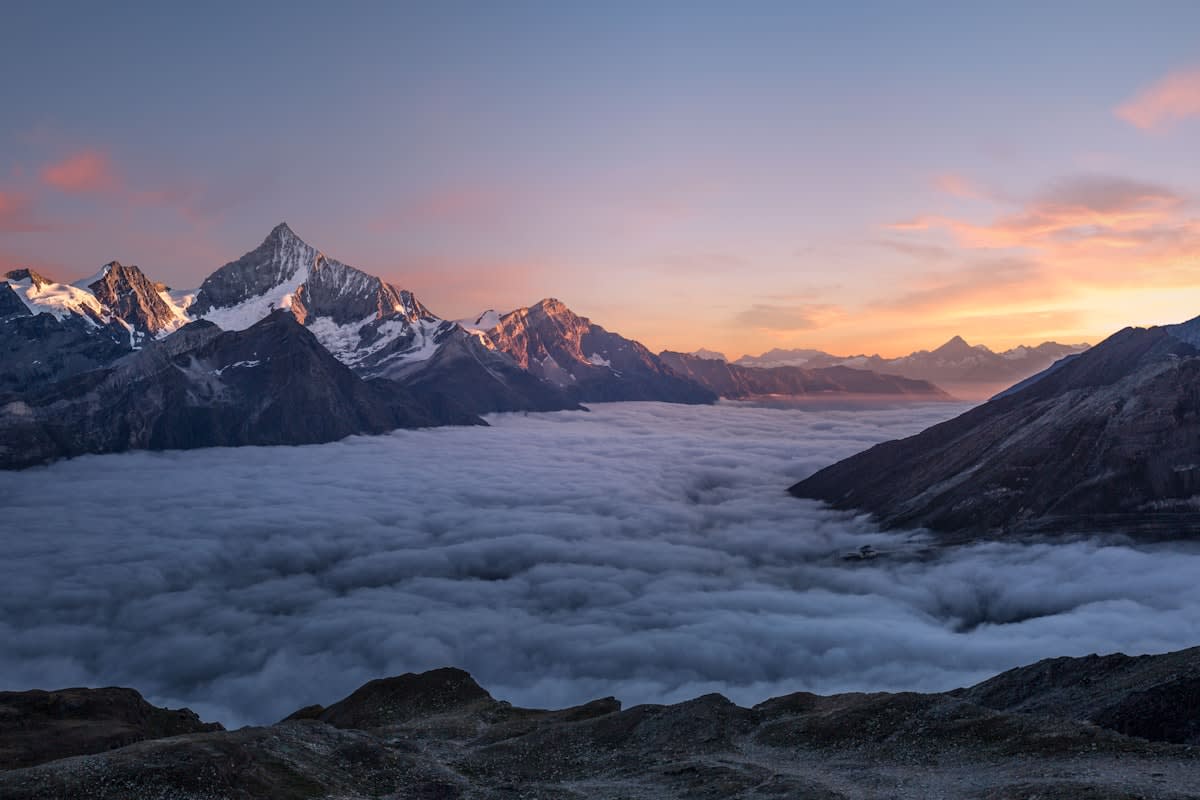
Nepal's monsoon season runs from mid-June to September, but rain-shadow regions like Upper Mustang and Dolpo, plus Kathmandu's cultural sites, offer excellent travel during the rains.
Most travel guides tell you to avoid Nepal in the monsoon. That advice, while not wrong, misses a more useful truth: the monsoon season — running from mid-June through September — closes some parts of Nepal and opens others. Rain-shadow regions like Upper Mustang and Dolpo receive a fraction of the rainfall that drenches Pokhara, while Kathmandu's medieval squares remain accessible year-round and host festivals that simply do not exist in October. For travellers who plan well, the monsoon offers lower prices, fewer crowds, and landscapes that look nothing like the dry-season photographs.
When Does Monsoon Arrive and How Long Does It Last?
Nepal's monsoon follows the Bay of Bengal moisture current, which typically makes landfall in the eastern Terai around June 10 to 15 each year. From there it moves westward across the mid-hills and mountains over the following two to three weeks, reaching Pokhara and Kathmandu by late June. The western districts — Humla, Jumla, and Darchula — receive monsoon rainfall last, often not until early July.
The variation in rainfall across Nepal's geography is dramatic. Pokhara, sitting at the foot of the Annapurna massif and exposed to moist air from the south, receives approximately 300mm of rain in July alone. Kathmandu gets around 180mm in the same month. Upper Mustang, tucked behind the main Himalayan range, receives only about 30mm — roughly a tenth of what Pokhara sees. This contrast is the foundation of sensible monsoon travel planning.
The monsoon withdraws gradually from early September, retreating from the far west first and clearing the eastern hills by late September. By early October, most of Nepal is dry again, which is why October and November remain the most popular trekking months. The weeks between mid-September and early October represent a genuine transition window when trails are still green, skies are clearing, and pre-season prices hold.
Best Destinations: Rain-Shadow Regions
The Himalayan range acts as a barrier to monsoon moisture. Valleys and plateaus that lie north of this barrier — between the main range and the Tibetan plateau — are in the rain shadow and stay largely dry from June through September. These are Nepal's most reliable monsoon trekking destinations.
Upper Mustang is the most accessible of the three classic rain-shadow treks. The former kingdom, closed to outsiders until 1992, requires a restricted-area permit currently priced at NPR 100,000 (approximately USD 750) for ten days — a cost that keeps crowds thin. The landscape is ochre and terracotta: eroded cliffs, cave monasteries, and the walled medieval city of Lo Manthang. The cultural heritage here is Tibetan in character, more closely related to Lhasa than to Kathmandu, and the monsoon months are when local farmers tend their barley fields and the annual Tiji festival sometimes falls. Jeep roads now reach Lo Manthang from Jomsom, making the route accessible to non-trekkers as well, though walking the original trail through Kagbeni and Chele gives a different and fuller experience.
Dolpo sits to the west of Mustang and requires a separate restricted-area permit (Upper Dolpo: NPR 135,000 for ten days). Lower Dolpo, including the Phoksundo Lake circuit, is less expensive and equally dramatic. The Shey Phoksundo Lake — Nepal's deepest lake at 145 metres — has a turquoise clarity that intensifies in the clear skies of the monsoon months. Dolpo sees very few trekkers even in peak season; during the monsoon the trails are effectively private. The trek requires experience, self-sufficiency, and a licensed guide under Nepal's current regulations.
Nar Phu Valley, tucked into a hidden pocket north of the Annapurna Circuit route, is perhaps the least-visited of the three. The valley shelters two ancient villages — Nar and Phu — where residents maintain a semi-nomadic lifestyle tied to the high-altitude pastoral economy. Access is through the Kang La pass or by branching north from the Annapurna Circuit near Koto. A restricted-area permit is required. The monsoon leaves the valley largely dry while the surrounding Annapurna faces receive heavy snow and rain, making July and August surprisingly good months to visit if you can manage the logistics.
Kathmandu Valley and Cultural Sites in Monsoon
For travellers who are not trekking, Kathmandu Valley in the monsoon is an underrated choice. The monuments — Pashupatinath, Swayambhunath, Bouddhanath, and the three Durbar Squares at Kathmandu, Patan, and Bhaktapur — are all fully accessible. Restoration work following the 2015 earthquakes is largely complete; UNESCO sources note the sites are better preserved now than in the years immediately before the earthquake. The monsoon adds an atmospheric quality: low cloud around Swayambhunath hill, water running through the traditional stone spouts (dhunge dhara) of Patan, and green moss on ancient brick.
Two major festivals fall squarely in the monsoon calendar. Teej, typically in late August or early September, is primarily a women's festival observed across the hill communities and Kathmandu. Women dress in red, fast, and gather at Pashupatinath in numbers that make the temple complex more alive than at any other time of year. Gai Jatra — the festival of cows — falls in late July or August and is a Newari tradition that combines mourning for those who died in the past year with processions through the old city streets. In Bhaktapur, the Gai Jatra celebrations are particularly elaborate and involve days of music, satire, and masked performance.
Lumbini, the birthplace of Siddhartha Gautama and a UNESCO World Heritage Site, is worth including in a monsoon itinerary. The Maya Devi Temple and the sacred garden surrounding it are greener in July and August than at any other time of year. Visitor numbers are far lower than in winter or spring, and accommodation in the monasteries that ring the central zone is easier to arrange. A Lumbini Museum Conservation Centre was launched in May 2025 to serve as a preservation hub for artefacts spanning more than 2,000 years of Buddhist history at the site.
Practical Tips: What to Pack and Expect
Waterproof gear is not optional. A good-quality breathable rain jacket — not a poncho — handles the combination of humidity and downpours better than either a poncho or a light windbreaker. Waterproof trekking boots with a firm grip matter on wet stone paths; trail runners with waterproof membranes are a lighter alternative for those not carrying heavy packs. Pack dry bags or waterproof liners inside your main bag, because even a supposedly waterproof rucksack cover fails in sustained rain.
Mountain flights, particularly to Lukla for the Everest region, are the biggest logistical variable. Lukla receives weather from the east and sees frequent morning fog and cloud in the monsoon months. Cancellations can stack for three or four consecutive days. Budget at least two buffer days in Kathmandu at either end of any Everest-region trek during the monsoon. The alternative — a road trip to Salleri or Phaplu and trekking from there — adds days but removes the flight dependency.
Off-season hotel rates are genuinely lower. A guesthouse in Thamel that charges USD 25 to 40 in October for a basic room will often negotiate to USD 12 to 18 in July. Teahouses on the Annapurna Circuit drop prices similarly. Negotiating is expected and accepted outside peak season.
Two regulations apply year-round and are strictly enforced in 2026. The solo trekking ban introduced in April 2023 remains in force: all trekkers in national parks and restricted areas must be accompanied by a licensed guide from a registered trekking agency. This applies regardless of season, experience level, or nationality. Second, e-TIMS registration is mandatory on all major routes. The electronic Trekkers' Information Management System requires pre-registration and QR scanning at village entry checkpoints. Registration is done online before your trek at tims.ntb.gov.np.
Budget Breakdown: What Nepal Costs in Monsoon 2026
Nepal remains one of the most affordable destinations in Asia for independent travellers. The monsoon season amplifies that affordability because off-season discounting is widespread across accommodation, transport, and tour operators.
Hostel dormitory beds in Kathmandu and Pokhara run USD 5 to 10 per night; private rooms in guesthouses start from USD 10 to 15. Mid-range hotels with attached bathrooms and air conditioning or heating fall in the USD 25 to 60 range. On the trekking trails, teahouse accommodation drops to USD 3 to 8 per night in the monsoon, though mandatory meal purchases at the teahouse are the actual economic model.
Food costs reflect the Nepal-first reality of the economy. Dal bhat — the national meal of lentil soup, rice, vegetables, and pickles with unlimited refills — costs NPR 280 to 560 (approximately USD 2 to 4) at a local restaurant, and NPR 840 to 1,260 (USD 6 to 9) at a tourist-oriented Thamel restaurant. A plate of momos (dumplings) runs NPR 210 to 420. Street food in the old city of Bhaktapur is often NPR 80 to 150 per item.
Transport between major cities is straightforward. The tourist bus from Kathmandu to Pokhara, a six-to-seven-hour journey, costs USD 8 to 12. Local public buses cover the same route for USD 4 to 5 but are slower and more crowded. Within cities, local buses are NPR 40 (approximately USD 0.28) per ride. Ride-share apps (Pathao, InDrive) and metered taxis are available in Kathmandu and Pokhara.
Visa fees for Nepal are fixed regardless of season. The most common options are: USD 30 for a 15-day visa and USD 50 for a 30-day visa. A 90-day visa costs USD 125. Visas are available on arrival at Tribhuvan International Airport and major land crossings for most nationalities. Indian citizens require no visa.
A realistic daily budget for a backpacker staying in hostels, eating at local restaurants, and using public transport is USD 20 to 30. Add trek-related costs — guide fees, permits, and teahouse accommodation — and budget USD 50 to 80 per day on the trail, before permit costs. Mid-range travellers in Kathmandu spending on comfortable hotels and restaurant meals typically spend USD 60 to 100 per day in the monsoon, meaningfully less than the USD 100 to 150 they might spend in October.
Frequently Asked Questions
Is Upper Mustang genuinely dry during the Nepal monsoon?
Yes, measurably so. Upper Mustang sits north of the Annapurna and Dhaulagiri ranges, which block the moisture-laden monsoon winds from reaching the valley. Rainfall in Jomsom in July averages around 30mm — compared to Pokhara's 300mm in the same month. The skies over Lo Manthang are typically clear, and dust from the jeep road is the more persistent inconvenience than rain.
Can I trek independently without a guide during monsoon?
No. Nepal's solo trekking ban, introduced in April 2023, requires all trekkers in national parks and restricted areas to be accompanied by a licensed guide from a registered agency. This rule applies year-round, including during the monsoon. Trekking independently outside protected areas in lower-altitude zones is technically possible but the regulation is enforced at checkpoints on major routes. Budget for a guide: licensed guides typically cost USD 25 to 45 per day depending on route and experience.
How far in advance should I book accommodation for the monsoon season?
For Kathmandu and Pokhara city accommodation, one to two weeks ahead is usually sufficient during monsoon — off-season means supply exceeds demand. For Upper Mustang or Dolpo, book your guide and agency at least four to six weeks ahead because permits require agency processing and the restricted-area permit application has a lead time. For Lumbini, walk-in bookings at monastery guesthouses are usually possible, but the two or three well-maintained hotels near the Maya Devi Temple fill faster than their monsoon reputation suggests.
What festivals happen during Nepal's monsoon season?
Several major festivals fall between June and September. Teej, a women's festival centred on Pashupatinath in Kathmandu, typically falls in late August or early September. Gai Jatra, the Newari festival honouring the dead, happens in late July or August and sees colourful processions through the old cities of Kathmandu and Bhaktapur. Janai Purnima (sacred thread changing ceremony at Pashupatinath and mountain lakes) falls in August. For Upper Mustang, the Tiji festival — a three-day masked dance ritual at Lo Manthang — sometimes falls in May or June depending on the lunar calendar.
Are Lukla flights reliable during monsoon?
Lukla flights operate during monsoon but face more frequent delays and cancellations than in October or November. The window for Lukla flights is typically the early morning — flights that depart before 9am have the best chance of operating before cloud builds. Cancellations of two to four consecutive days are possible during sustained monsoon weather. Build a minimum of two buffer days in Kathmandu before your planned Everest trek start date, and two days at the end before any international connection. Helicopter evacuation costs from the Khumbu region run USD 1,000 to 3,000 per person; travel insurance that explicitly covers helicopter rescue is strongly advised.
